Tuesday, October 13, 2015

Towards Airlie Beach

Leaving Paronella Park we continued along the old Bruce Highway passing through Japoonvale before joining the Highway at Silkwood 24 km later. 

This road was very narrow in places and had many twist and turns which kept our speed down below 60 km/h. The scenery was just lovely with the mountains covered in mist from last nights rain and with beautiful green sugar cane farms lining the road.

Unfortunately the south easterly winds that have been blowing for the past week were still very strong and were playing havoc with our fuel consumption as we headed south. 

We were pleasantly surprised with the changes made along the foreshore at Cardwell and how large the town has grown. 
In the past I have always stopped and purchased a piece of crumbed fish from the BP servo on the highway. They are renowned for there fish, but unfortunately it wasn't all that long since having breakfast. 

We stopped just south of Ingham for our morning break before taking the bypass road around Townsville. From here it was 93 km south to Ayr and to our camp for tonight at Home Hill a further 11 km away. We had planned to camp at the showgrounds but a comment on Wikicamps suggested not to stay there because there wasn't any protection from the strong winds that were whipping up great clouds of dust.

Our next option was the RV comfort stop for vans behind the main street. Its a great incentive by the local council with free hot showers and toilets. It encourages people who stay to spend money in the town just like we did at the local supermarket. 

Yet another days driving into strong head winds. We left the highway and drove into Bowen which now has 'Bowenwood' painted on the towns water tower after parts of the film Australia were shot here. Fuel was very cheap at $122.9 cpl so we topped up the tanks before continuing on towards Airlie Beach. 

We are staying at the Big 4 at Cannonvale for five nights with two extra free nights thrown in.

Airlie Beach was almost like our second home during the 80's and 90's. We would visit here each year as we tried to escape the winters in Canberra. 

I started coming here during the 1970's when I was doing my diving courses with Barrier Reef Diving Services. I obtained my Divemaster certification in 1982 and the Barrier Reef is just a magical place to dive and photograph.

I'm on the right and the other photo is a macro shot I took of a starfish's tentacle. 

Instead of having dinner out at night we have been doing lunches. 
We enjoyed a beer and a pizza at Mr Bones Restaurant overlooking the lagoon:

Our view from the Airlie Beach Sailing Club. I had the coral trout and Ros enjoyed her chicken parma:

Sorrento Italian Restaurant is located overlooking the Abell Point Marina. We both enjoyed a pasta meal with Ros having the puttanesca penne (roasted vegetables and pesto). I enjoyed my prawn and spanner crab linguini and we shared a garlic and parmesan pizza bread.

The lagoon area at Airlie offers all year round swimming without the threat of  being bitten by 'Box Jellyfish' which are present in the waters in Northern Australia from October till May. It has really enhanced the foreshore, before the lagoon was constructed this whole area was just mud flats when the tide was out.

There is also a stinger enclosure just along from the sailing club:
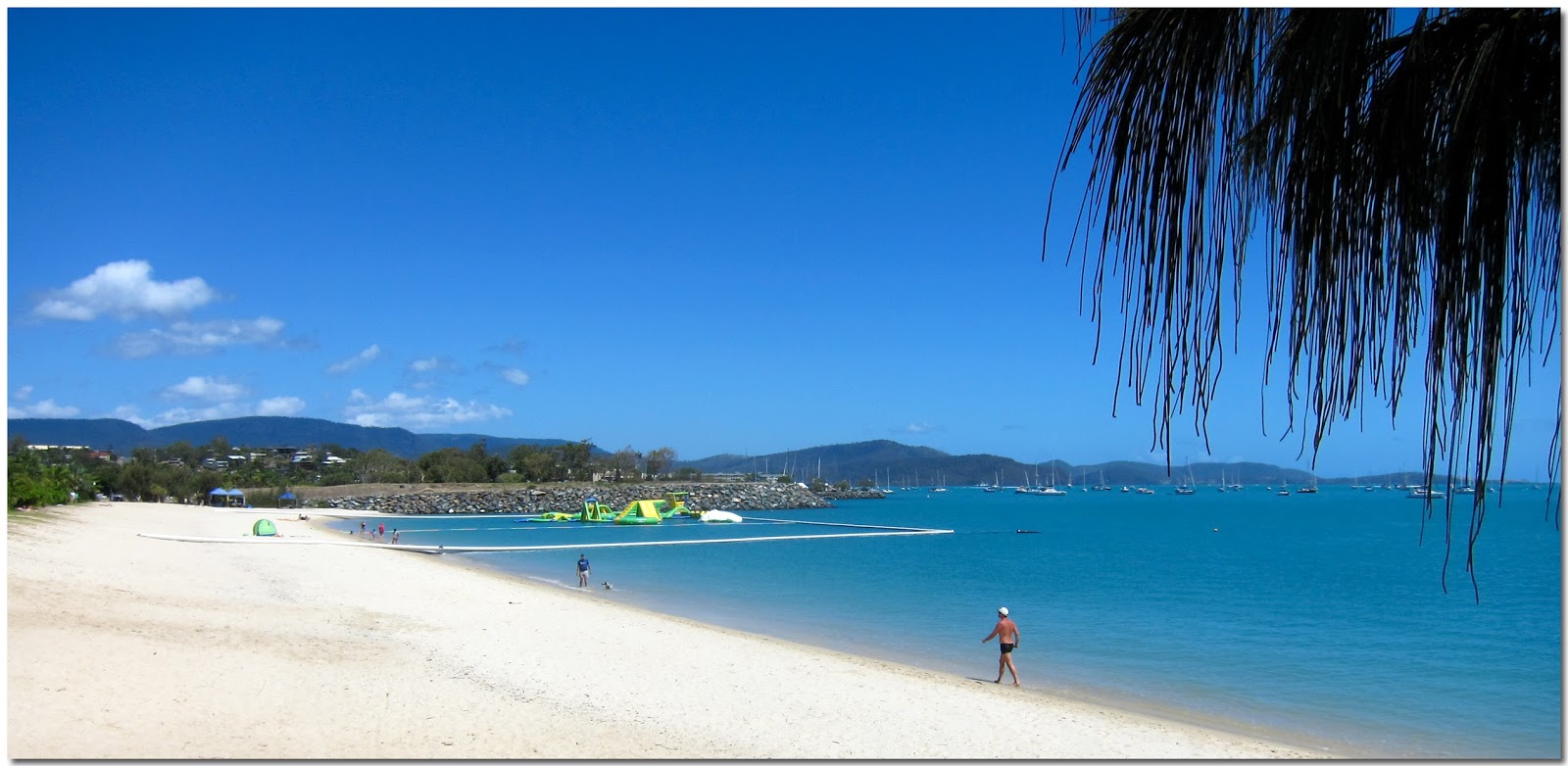
Airlie Beach always looks great when the tide is in:

Shute Harbour used to be the only transit facility for people going to the Whitsunday Islands or doing day trips, but now all that has changed. 

Boats now depart from the Port of Airlie to the Whitsunday Islands.

Wednesday, October 7, 2015

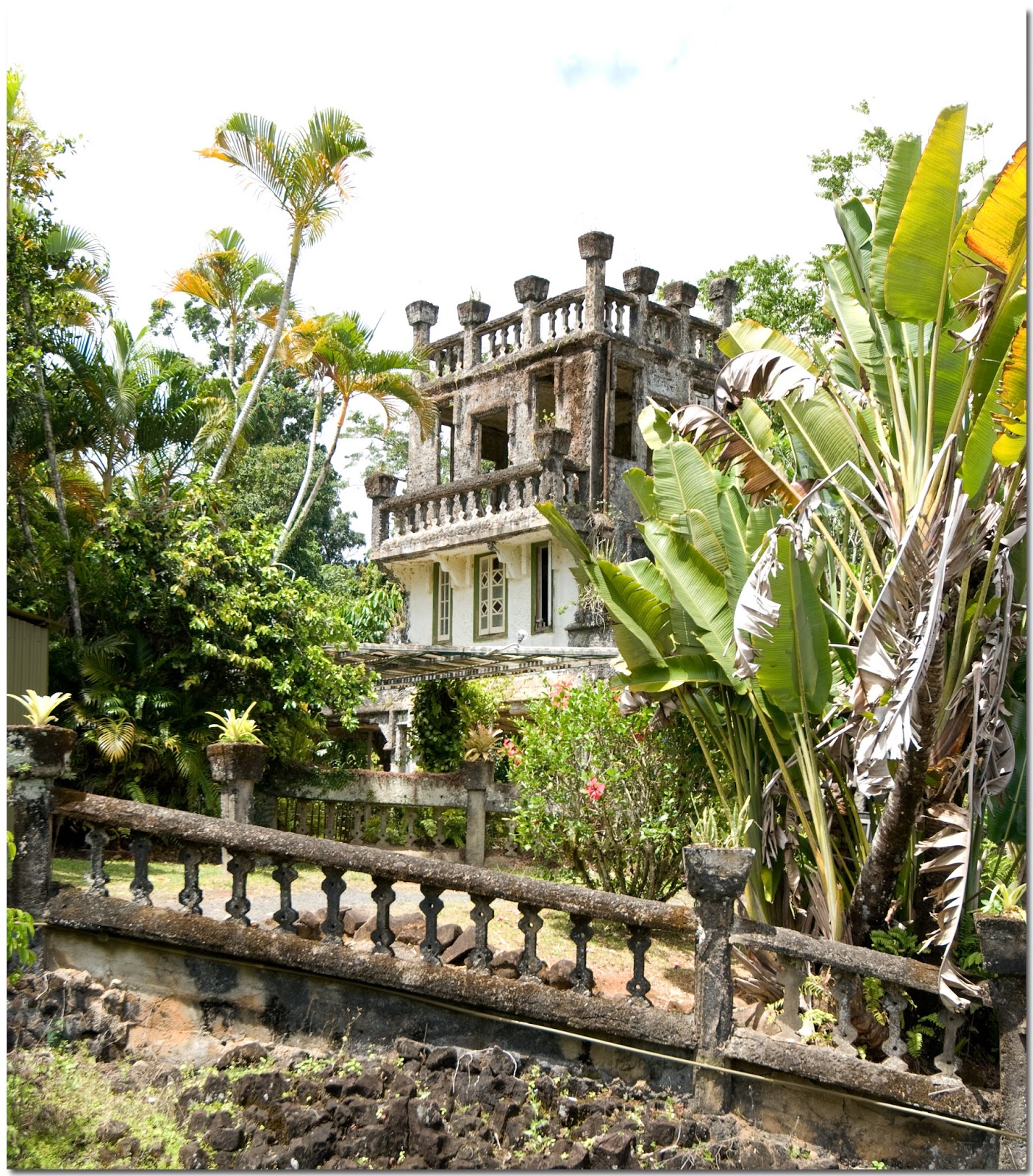
Paronella Park - The story of a Spaniard's Dream

As we left Palm Cove at 8:30, the winds were still blowing as they had for the past four days. Unfortunately, they were blowing from the south-east, which had us driving into a severe headwind.
 
Today's 137 km drive takes us to Paronella Park, situated 17 km south of Innisfail on a section of the old Bruce Highway beside Mena Creek Falls.
 
Powered caravan accommodation is free if you purchase a ticket to tour the park. For $76.00, we enjoyed the day, night, and hydro-electric tours. They even included free Wi-Fi.
 
We received a very warm welcome from Mark Evans, who shook our hands upon arrival. We later found out that he and his wife, Judy, actually owned the park. Talk about great PR.


Jose Paronella arrived in Australia from Spain in 1913. He was a pastry chef by trade, but he had a burning desire to build a castle. This desire came from stories told by his grandmother when he was young.


For eleven years, he worked cutting cane on farms around Innisfail. He never spent his money on alcohol or gambling like the other cane cutters did, but saved every cent he could. With the money he saved, he started buying cane farms, which he would improve before selling. This was one of the ways he gained his wealth. He also engaged in money lending to help increase his wealth.


With this money, Jose purchased 13 acres of land in the rainforest next to Mena Creek Falls.


He had promised to write to his fiancée, Matilda, who was in Spain, but this never happened. When he returned to marry her after eleven years, she had married someone else. He then married her younger sister, Margarita, and returned with her to Australia.


Before his grand plan could be realised, Jose needed a way to move materials from the lower level to the higher level. He achieved this by building a grand 47-step staircase.


The picnic area beside the waterhole, including the picnic tables.


He then constructed their stone cottage.

His castle was the focal point of the park. It’s hard to understand how a pastry chef could accomplish so much. In 1933, he installed the first hydroelectric scheme in North Queensland to power his park and the castle grounds. 
 
The first two photos were taken from the entrance of the hydro plant.


The opening in this photo is the entrance to the hydro plant, and the pipe below it returns the water to the creek after passing through the turbine.


By 1935, he was prepared to host the public.
 
Connected to the castle, he created an entertainment area that included a cinema. On weekends, this space was transformed into a ballroom with live bands.


More than 7000 trees were planted in 1933, including the smooth-barked Kauri pine that makes up the Kauri Avenue.


The lower refreshment rooms were constructed and included changing rooms for swimmers, overlooking the tennis courts that were built using crushed termite mounds.


In 1946, logs from a clearing upstream blocked the creek before it could flow over the falls and damage the refreshment rooms. The Paronellas were undeterred by this setback and, within six months, had resumed operations.


Tragedy struck again when Jose passed away in 1948 from stomach cancer. His wife, Margarita, daughter Teresa, and son Joe carried on. Margarita died in 1967, and Joe, from cancer as well, died in 1972, with the park eventually being sold in 1977.


In 1979, a fire destroyed the castle, leaving only the Turret and walls. Plans are now underway to reopen the ballroom within the next three years and restore it to its former splendour.


In 1993, Mark and Judy Evans purchased the rundown park and have been gradually restoring it. In 2009, the hydro turbine was refurbished and is now supplying enough power for the entire park once again.
 
Back in 1993, the park employed ten staff, but that number has since increased to sixty-five. During the holiday season from June to October, Mark mentioned that they need between 200 and 300 visitors daily to keep the park viable.
 
Our night tour was scheduled for 8 pm. We experienced some minor showers in the late afternoon. Just before the tour began, heavy rain started falling, continuing throughout most of the hour-long tour.

The castle with its original stained glass windows.

Mena Creek Falls.

The refreshment rooms have a fountain that is gravity-fed from the stream.

Monday, October 5, 2015

Its all about location location location

We left Wonga Beach this morning, heading north towards Palm Cove, 25 km from Cairns. There is a council-owned caravan park, operated by a private company, located just metres across the road from the water.
 
After passing Port Douglas, we continued south along the Captain Cook Highway. 


Rex Lookout is an ideal spot for hang-gliding and paragliding. On weekends, provided the winds are favourable, it's always delightful to sit and watch them glide above the mountain range behind the lookout. The beach below serves as their landing spot.


We first stayed at Palm Cove in the late 1980s, but have not returned since our last visit to Far North Queensland in 1998. Since then, the park has had a new amenities block and front office constructed, along with new water and power outlets at each site.


Unfortunately, nothing else has changed, with no facility to remove wastewater from caravan showers, which simply runs out across the road. There is very little grass, as most sites are covered in a mixture of sand and dirt. The majority of sites are not level, and there is only one bitumen road; the rest are dirt and gravel. When the wind blows—as it often does at the beach—everyone is covered in dust.


So why would anyone stay here when a powered site costs $50.00 per night? Well, Palm Cove itself has a charming atmosphere with many resorts, cafes, restaurants, and shops that cater for all budgets. There is a lovely beach just metres from the caravan park, perfect for swimming and sunbathing.
 
The esplanade along the beach is lined with a mix of coconut palms and the largest paperbark trees you are unlikely to see anywhere else.


We are situated on site 41, which is located along the back fence. Future plans include building a large camp kitchen in the centre of the park, where the barbecues are currently located.


Campers who come here to escape the winter cold down south are upset about recent changes. These visitors, who used to stay for months at a time and always book the same site, can no longer do so. They can still book in advance, but management will now assign them a site upon arrival.


This particular bird is a Bush Stone-curlew. If you have never heard their spine-tingling calls at night, then you're in for a shock. They kept us awake on and off during our stay here. 


We spent a few hours in Cairns during one of our excursions. 


The lagoon below provides year-round swimming access without the threat of stingers or crocodiles.


On our way back to Palm Cove, we stopped for a beer at Pacific Palms Country Club. I've played golf there twice, but unfortunately I didn't have my clubs with me this time. 


With the combination of a Labour Day long weekend and the forecast for Saturday, 3rd, and Sunday, 4th October, predicting 20 to 30 knot winds and rain, we chose to spend two extra days at Palm Cove instead of being on the road.
 
Unfortunately, we had to change sites and move from our powered site to one without power. We packed up in the falling rain and relocated to site 84, just inside the park entrance, with the rear of our van facing the esplanade. The predicted winds blustered all day, accompanied by intermittent showers.


We donned our Paddy Palin coats and headed down the esplanade, browsing the shops. Ros bought two 'tigerlily' dresses and I picked up a Palm Cove singlet. The rest of our day was spent reading, and we both had our first afternoon nap until it was time for our drinks.
 
Sunday's weather was quite similar to yesterday's, minus the rain. Maria and Paul, who have been here for ten weeks, invited us to lunch at the Ellis Beach pub. Sunday is oyster day, with oysters flown in from Coffin Bay in South Australia. You can have them either natural or flavoured. For my starter, I chose a dozen mixed oysters, with my favourites being ginger and mirin. A local band played until 4 pm.
 
Later that night, we watched part of the NRL grand final on a large screen set up at the caravan park. We watched most of the final here until the rain returned, and we had to go back to our van to see the rest. It was great to see the Cowboys win.