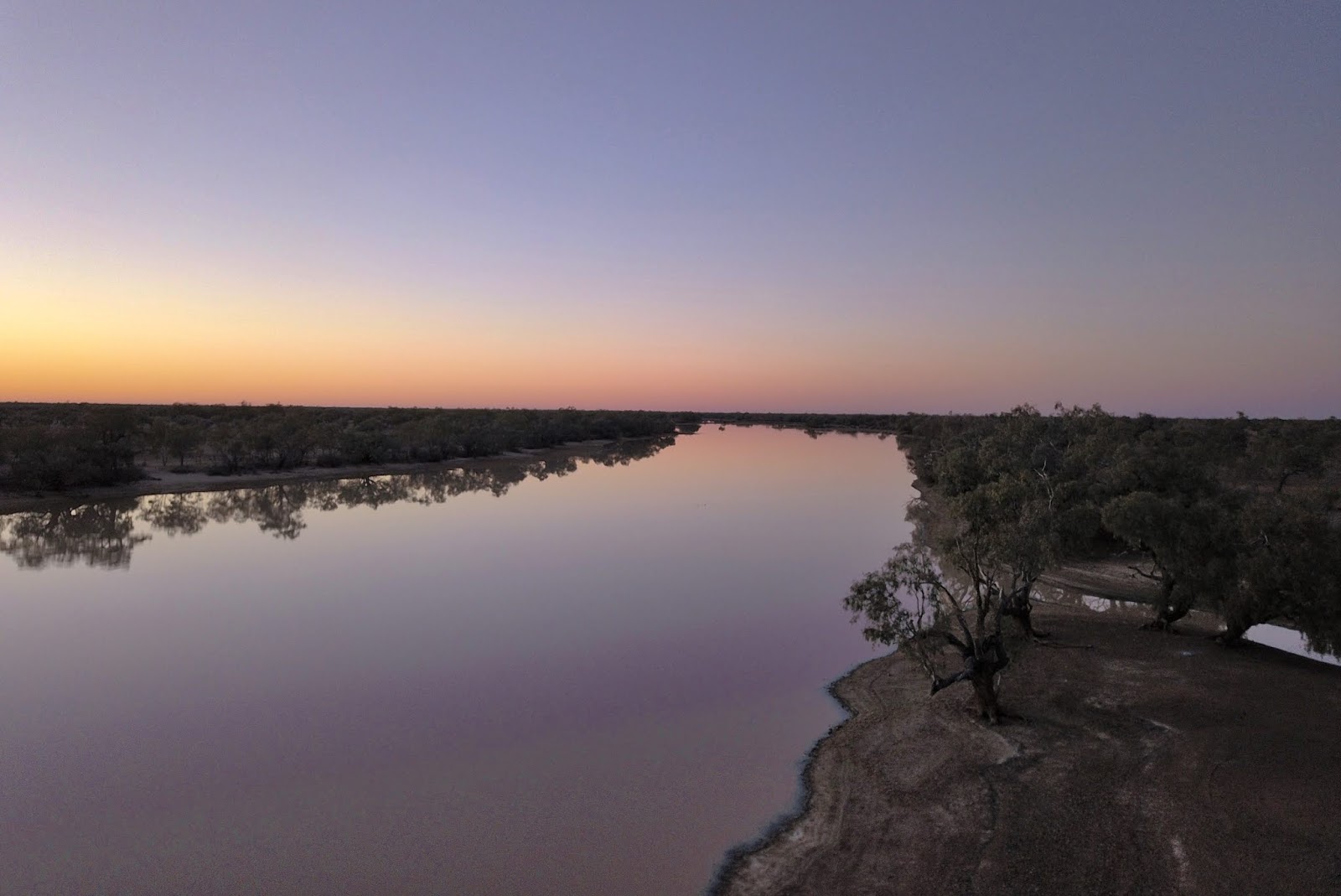
Wednesday, September 26, 2018

Heading Home The Long Way

Our van spent two days at the Bushtracker factory in early September, where two items were replaced under warranty and additional items were fitted. We also encountered an issue with our hot water system, but a hot water and gas service quickly resolved this troublesome problem.


While the van was receiving some much-needed TLC, we took a break. We stayed at the Rivershore Resort in one of their luxury safari tents equipped with all the modern comforts. The resort is a 15-minute drive from the factory, and the restaurant offers breakfast, lunch, and dinner.


Rivershore

Our Camec 4 kg washing machine stopped working about a month ago, and we've been experiencing issues with our DVD player.


You can imagine our surprise when we found out that the washing machine had a two-year warranty, while the Fusion DVD player was covered for three years. Two brand-new items were installed at no cost. Talk about happy days.


We also installed two rear stabiliser legs along with a bike rack that fits behind our generator box. It was supplied by South East Stainless, which is located just down the road from the Bushtracker factory.


It was a short drive north to Cooroy, where we spent three days camping near this charming little town.

The Cooroy RV stop is for fully self-contained vans with no power available and requires all water to be stored onboard. It's lovely and quiet, with a dump point 100 metres away and fresh town water. At $10 per night, it suits us perfectly.


We left Cooroy on a Monday morning, heading south along the Bruce Highway as far as the Landsborough turnoff. This road runs parallel to the highway, offering a quieter alternative. From here, we took Peacheaster Road, which eventually joins the D'Aguilar Highway just north of Woodford.
 
From there, we headed west on the D'Aguilar Highway through Kilcoy and onwards to Blackbutt for a quick stop at the bakery before turning south at Yarraman. We briefly followed the New England Highway through Cooyar and Wutul before heading cross-country on minor roads to spend the night at the Jondaryan Woolshed.
 
The woolshed is heritage-listed, the oldest operating woolshed in the world, built in 1859. We camped by Oakey Creek, but at $22.50, we thought that was a bit much, considering we used all our own facilities.


A quick stop outside the Nindigully Pub for a coffee break before heading south to camp at Thallon. 

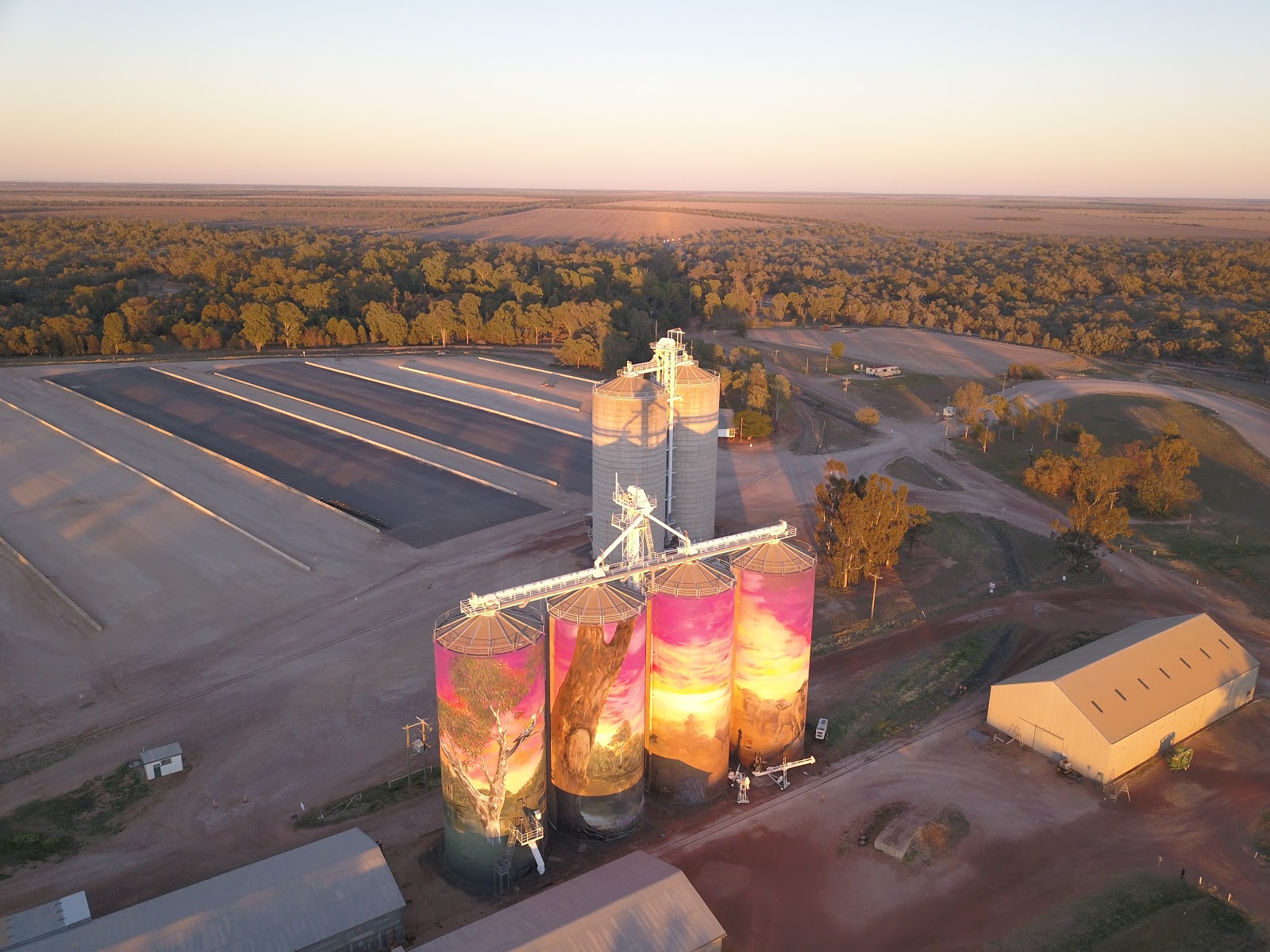
We passed through Thallon in June while heading to the Big Red Bash at Birdsville in July, but we are staying here for the evening to photograph the art on the nearby silos.


These silos are the first to be painted in Queensland and the first operational silos in Australia to be painted. 

It was wonderful to set off this morning without the strong winds we've experienced over the past two weeks. There was just a gentle breeze at the tops of the trees that persisted throughout the day.


We headed south towards Mungindi. From just north of the town, we turned south-west towards Collarenebri. Along the way, we stopped to see the One Ton Post beside the Barwon River, 8 km west of the town.


This post is the largest survey peg in Australia and was erected by John B Cameron in 1881. Cameron's Corner, where the three states meet, is named after him. It marks the eastern end of the 700 km long fence that divides New South Wales from Queensland along the 29th parallel. 


The first 40-odd kilometres towards Collarenebri and the last 15 kilometres before reaching the town are bitumen. In between, it is quite a good dirt road with only a few corrugations, but most of this is covered with quite deep bulldust.


Our plan was to camp on the Barwon River west of town for three days. However, the drought has really taken hold of this area, as has much of the country we have passed through on this holiday. It's very depressing passing by properties where the cattle and sheep are being fed because the paddocks have no grass, just dirt.


From Moree, it wasn't too much further towards Gum Flat Reserve on the Gwydir River. We have stayed here before and have another lovely site along the river. There is an eco-toilet and rubbish bins.


After reading discussions among other Bushtracker owners, we decided to buy a Snow Peak fire pit from Drifta. It is made in Japan from marine 316 stainless steel. The frame that sits over the pit can be adjusted in height to suit different heat levels. After just a week of use, we both agree that it was money well spent. Snow Peak


While our Ryobi reciprocating saw was suited for cutting firewood, we have replaced it with a Stihl battery-operated chainsaw. Although it's not cheap, it will certainly last much longer than the Ryobi tool. 
I'm amazed by just how good this product is, with its 12-inch blade and a lithium-ion battery that charges in just an hour. The battery can cut through 100 logs on a single charge. It cuts like a hot knife through butter. 

On our final night before heading home, we stayed at Cangai. It’s a free campground on the Mann River, west of Grafton. Although there are no facilities, the river water is suitable for our non-potable tanks.


We returned home after being away for three months, during which we travelled 10,905 kilometres. Our fuel efficiency averaged 20.2 L/100 km, with the Big Red Bash at Birdsville being a particular highlight.

Thursday, August 30, 2018

Carnarvon Gorge National Park

We have spent the past three days camping at Sandstone Park. It's a new camping site located approximately 6 km from the Carnarvon Gorge Visitor Centre, at the beginning of the gorge walking tracks. There are 41 very large sites offering 360-degree views of the surrounding countryside.
 
There are no powered sites available here; the only facilities include portaloos scattered throughout the site, a dump point, and fire pits located at each site. They have also removed the unnecessary rule of retaining greywater, allowing it to flow onto the ground where it is badly needed. Daily fees are currently $23 per site.


This new tourist venture is located on Bandana Station, which covers 43,000 acres and borders the national park. The station is now organic and typically has about 2200 cattle.
 
This is our third visit to Carnarvon Gorge, with our last trip in August 1997. At that time, camping was permitted throughout the year in the national park, but it has now been restricted to school holiday periods.
 
On our second day, we walked as far as Cathedral Gorge, which involved crossing Carnarvon Creek a total of forty times.
 

The return distance to the visitor centre is 18.2 kilometres. Of course, there are many interesting sites that branch off the main track, which increases this distance by quite a few more kilometres.


Some of the side trips include sites like Wards Canyon, which is a very steep climb that really gets the blood flowing with its hundred-odd steps, ultimately leading into a side gorge that shelters the world's largest fern, the king fern.


Then there is the Moss Garden, where water constantly drips from the sandstone to support the mosses and ferns that thrive here.


The amphitheatre is a 60-metre-high chamber carved out by running water over thousands of years.


On our final day, we paid what we believed was a very reasonable $165 for three of us to enjoy a twenty-minute flight over 'Bandana Station' and Molleyamber Gorge.

Sunday, August 19, 2018

Towards Innamincka

After our unplanned six-night stopover in Longreach, we headed south along the Thomson Development Road. We made a brief stop in Stonehenge before continuing to the Swan Vale rest area, 40 km north of Jundah and 176 km south of Longreach.


We passed by this site many years ago, and it has remained in our memory ever since. It’s a great overnight spot with plenty of space, even for larger vans. There are sweeping views to the north, and the sunsets here are truly special.


A brief stop in Jundah before heading on towards Windorah. Our plan was to camp on Cooper Creek south of town, but the very strong winds made that impossible. The dust was uncontrollable, and we would have spent the rest of the day trapped inside the van.


A quick visit to the town to camp at the local caravan park in a non-powered site was really our best option. The park surface, similar to blue metal, offered some relief from the clouds of dust. The vans were positioned to avoid the setting sun and the powerful westerlies.


That afternoon, we wandered down to the local pub for several beers, and by chance, a couple I have been following on YouTube turned up to spend the evening. Here is a link to a series of clips they have produced. MrHunterjagter.
 
They were heading to Birdsville to cross the Simpson Desert. We will be in a small snippet they filmed outside the pub while we enjoyed our beers.
 
Camping beside the Kyabra waterhole has been on my bucket list for years. I have read threads about how beautiful it is, and we were not disappointed when we arrived. The waterhole is 45 km north of Eromanga, and the once dirt road connecting the Diamantina and Cooper Development roads is now fully bitumen.
 
Our group was the only one here that night, and whoever had camped here before left an abundant supply of firewood, which we gratefully used. Lamb cutlets cooked over the open fire that evening were certainly hard to beat.


Just under an hour after leaving Kyabra Waterhole, we arrived in the small town of Eromanga. This town of 400 residents claims to be the furthest from the sea in Australia. More recently, discoveries of the largest dinosaur bones ever found in Australia have been made on a nearby property.
 
We were just passing through, but we wanted to visit the Natural History Museum. The museum opened in 2016, and funds have now been granted to expand the facility with larger display areas for the growing number of discoveries currently being made.
 
Part of the expansion, which is hoped to be completed by 2020, includes upmarket accommodation and a caravan park with all facilities.
 
Dating has confirmed that this 'Titanosaur' is between 95 and 98 million years old. Its name is 'Cooper', and the following photograph shows its actual size compared to the Royal Hotel in the main street.


The Eromanga Natural History Museum offers guided, hands-on tours through its workshop laboratories and collection rooms. The hour-long tour, priced at $25, is both informative and enjoyable.


After finishing our tour, we continued southwest on the Cooper Development Road towards Noccundra. The pub is the last remaining building in this once small township. 


This is our fourth visit, and we couldn't believe how busy it was with vans lining the waterhole, although we usually pass through here later in the year. Even though it's almost in the middle of nowhere, it's just wonderful to have water views when much of the surrounding countryside looks half dead and lifeless.


On our second day, we enjoyed a few Cooper's Sparkling Ales at the pub before returning later that evening for a meal and a fine bottle of red. The pub has been serving beer since 1882, but I'm sure it wasn't as cold then as it is now.


From our Wilson River camp, we soon rejoined the Adventure Way, heading west towards the "Dig Tree' on Nappa Merrie Station, just across the South Australian border. On our way, we passed by the Jackson oil fields and Ballera gas fields. The oil produced at Jackson is transported to Brisbane by pipeline, and the gas from Ballera and Moomba in South Australia supplies up to 80% of the Australian population.


The Burke and Wills expedition of 1860-61 met a tragic end here when their support team left the "Dig Tree' site just hours before Burke, Wills, and King returned. King was the only survivor after being assisted by local Aboriginal people, and he was rescued several months later.


Our campsite along Cooper Creek is just a few hundred metres from the 'Dig Tree'.


Apart from the 14 km access road into the 'Dig Tree', our entire journey so far has been on bitumen, but that will change later today when we head towards Innamincka. Our first visit here was in 1994, and since then, we have returned many times over the ensuing years. In terms of infrastructure, there is the pub and trading post, showers for those who don't travel with their own, along with toilets and of course fuel. 


Camping on Cooper Creek beside the tall red gums lining both sides is truly special. The bird life in the mornings and early evenings can be quite deafening, especially with the thousands of corellas roosting in the trees.


There are many camping sites spread along the creek, including Cullyamurra Waterhole, Policeman's Waterhole, Minkie Waterhole, and Ski Beach, to name a few. Camping fees are $12.00 per night at these sites because they are within the Innamincka Regional Reserve.
 
After arriving, we drove a short distance to camp on the town common for just $5.00 a night. The only facilities here are drop toilets. The town common is located outside the Innamincka Reserve, which is why the camping fees are lower.
 
Rain fell over this area in early July, and it's impressive how the countryside responds in such a dry and dusty environment.


The evenings and early mornings have been very cold, with temperatures falling below zero. Thanks once again to our diesel heater, which makes camping so enjoyable.