Upon our arrival, at Old Macs Farm we spent the day around the van, managing two loads of washing and addressing an issue with our non-potable pump. I discovered that the problem was caused by a leak from our hot water service, which I noticed running down the side of the van. After making a couple of slight adjustments with a shifter at the John Guest fitting where it connects to the heater housing, the issue was resolved. I’m convinced that the sealed rough roads we’ve been traveling on contributed to this problem.

On our second day in Launceston, we woke up to a chilly morning temperature of just 1.9 degrees. The day was partly cloudy, but there was enough sunshine to recharge our batteries. We decided to visit Cataract Gorge Reserve, which is located only 1.5 km from the city center. Unfortunately, Mr. Google took us on a roundabout route from Old Macs Farm, and not providing a different option like it normally does. Our return journey followed the same route.
We chose to ride the Gorge Chairlift, which offers a stunning bird's-eye view and holds the title of the world's longest single-span chairlift at 475 meters.


Instead of taking the chairlift back, we opted to walk. The gorge walk, originally built in the 1890s, follows the cliff face and provides beautiful views of the South Esk River below.
Around every turn, there were rhododendrons of varying heights, all covered in buds. It will be a truly amazing sight when they are all in bloom. We were lucky enough to photograph this lovely specimen that has flowered early.
 |

We were fortunate to see the Lady Launceston cruising up the gorge. Unfortunately, we were disappointed to discover that we could not cross the historic suspension footbridge, which is 60 meters long, due to ongoing maintenance work.


On Thursday, April 10, we drove along the western side of the River Tamar to Beaconsfield, a former gold mining town where gold was discovered in 1887. George Town is Australia's third oldest European settlement behind Sydney and Hobart.
We visited the Beaconsfield Mine and Heritage Centre, where we learned about Todd Russell and Brant Webb's incredible 2006 mine rescue. They were trapped nearly a kilometer underground for almost two weeks. A multisensory simulation of the rockfall allows visitors to experience the cramped space where they were trapped, making it a truly confronting experience.

These are the actual overalls worn by both men during their ordeal.
 |

The yellow cage transported men down into the mine shaft, and the rope and machine controlled their descent.


We crossed the Batman Bridge on our way to George Town, stopping to shop at the local Woolworths.

 |
We walked from where we'd parked our car to Don Mario's Ristorante. I had seen reviews praising the wonderful food at this restaurant, so we were eager to see if the comments were accurate. Ros chose the Cannelloni and declared it the best she had ever tasted I opted for the Spaghetti Gamberi, which featured sautéed tiger prawns with chili, garlic, white wine, light soy, and green onion. We both agreed that the reviews about the meals served here were well-deserved. As we were leaving, we recognised Don Mario from photos we'd seen sitting outside on the footpath, enjoying a coffee after preparing our meals, so we took a moment to thank him for the delicious food.
 |

On Friday, April 11, we decided to take an Uber into central Launceston because parking our Chevrolet in unfamiliar car parks is too difficult due to its size. It was nice to be driven and see some of the lovely old homes Ros has been commenting on as we've driven along.


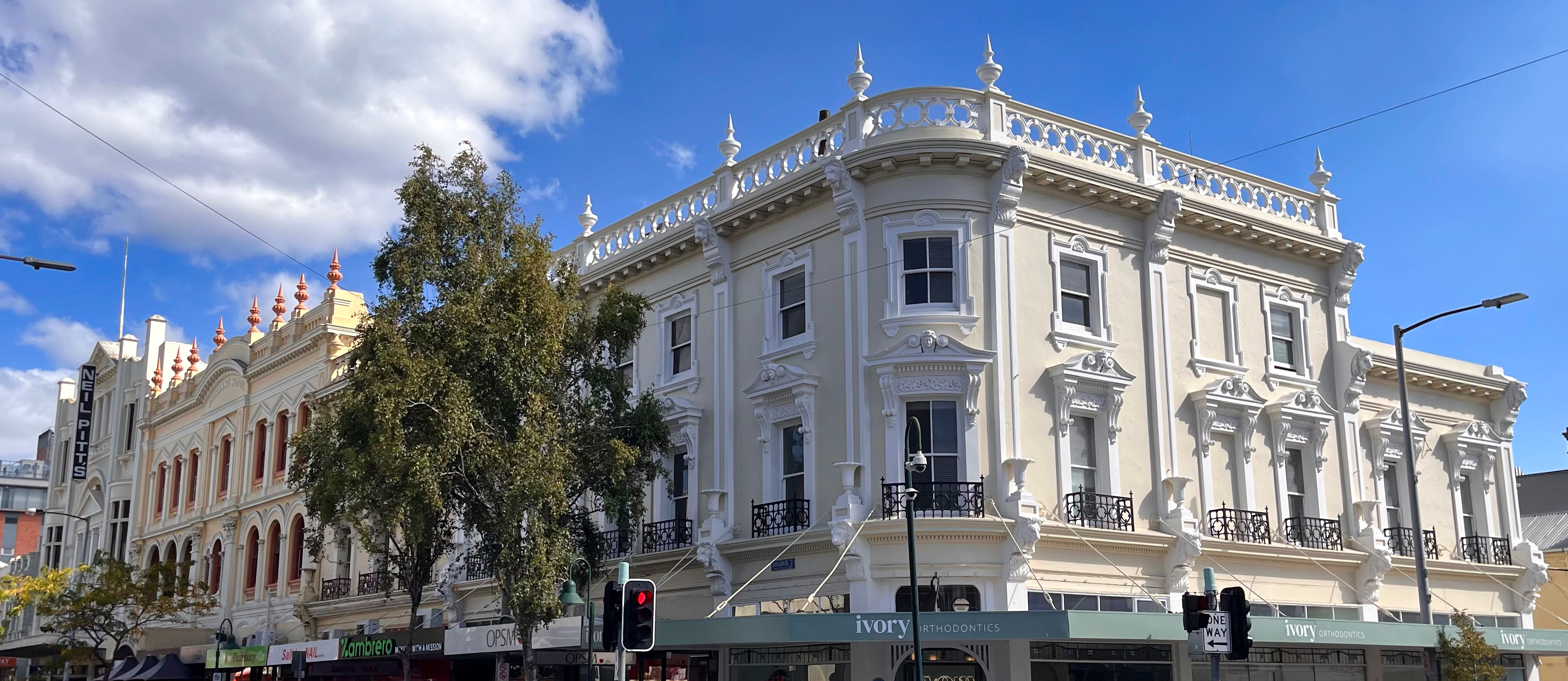

 |
 |


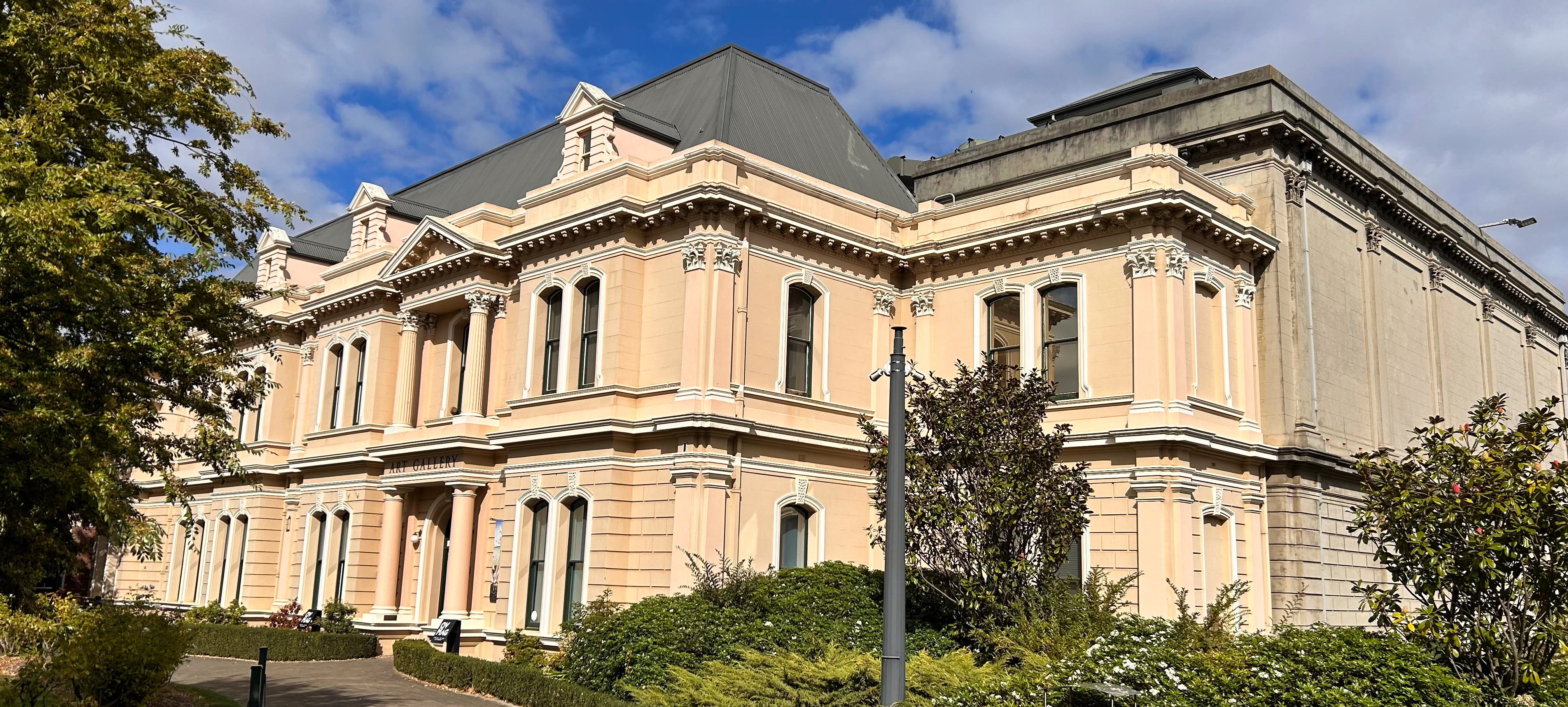

We enjoyed lunch at The Plough Inn on Brisbane Street. Ros enjoyed her lamb shank while I savored my seafood platter.

Saturday was a quiet day spent around the van, followed by a walk around the lakes at Old Macs Farm. We had heard about the Sunday markets in Evandale, located 19 km south of where we were staying. The story is that the markets offer a wide range of fresh produce, handicrafts, and artisanal goods for sale, but we found them to be quite ordinary and didn’t quite understand what all the fuss was about.
Our non-potable pump has started " hunting" (click) again every ten seconds. The original issue with water leaking from the hot water system has not returned, so I have replaced the pump with one we previously had. There has been an improvement, with the hunting occurring every twenty minutes. However, there is still a problem with our water system that may allow air in or drip, which I cannot locate. I may need to visit Bushtracker for a service to resolve this issue, possibly in October.
Today, we traveled south to visit Franklin House, which was built in 1838 by Britton Jones. He arrived in Hobart as a convict in 1820 and was granted his freedom in 1825. After that, he became an innkeeper and brewer, delivering his ales and spirits around Launceston.


 |


 |

Charles II's travelling trunk, made from oak and covered with horsehide, was left behind in Jersey during his escape from England.

The house was scheduled for demolition in 1960. It was the first National Trust house in Tasmania.
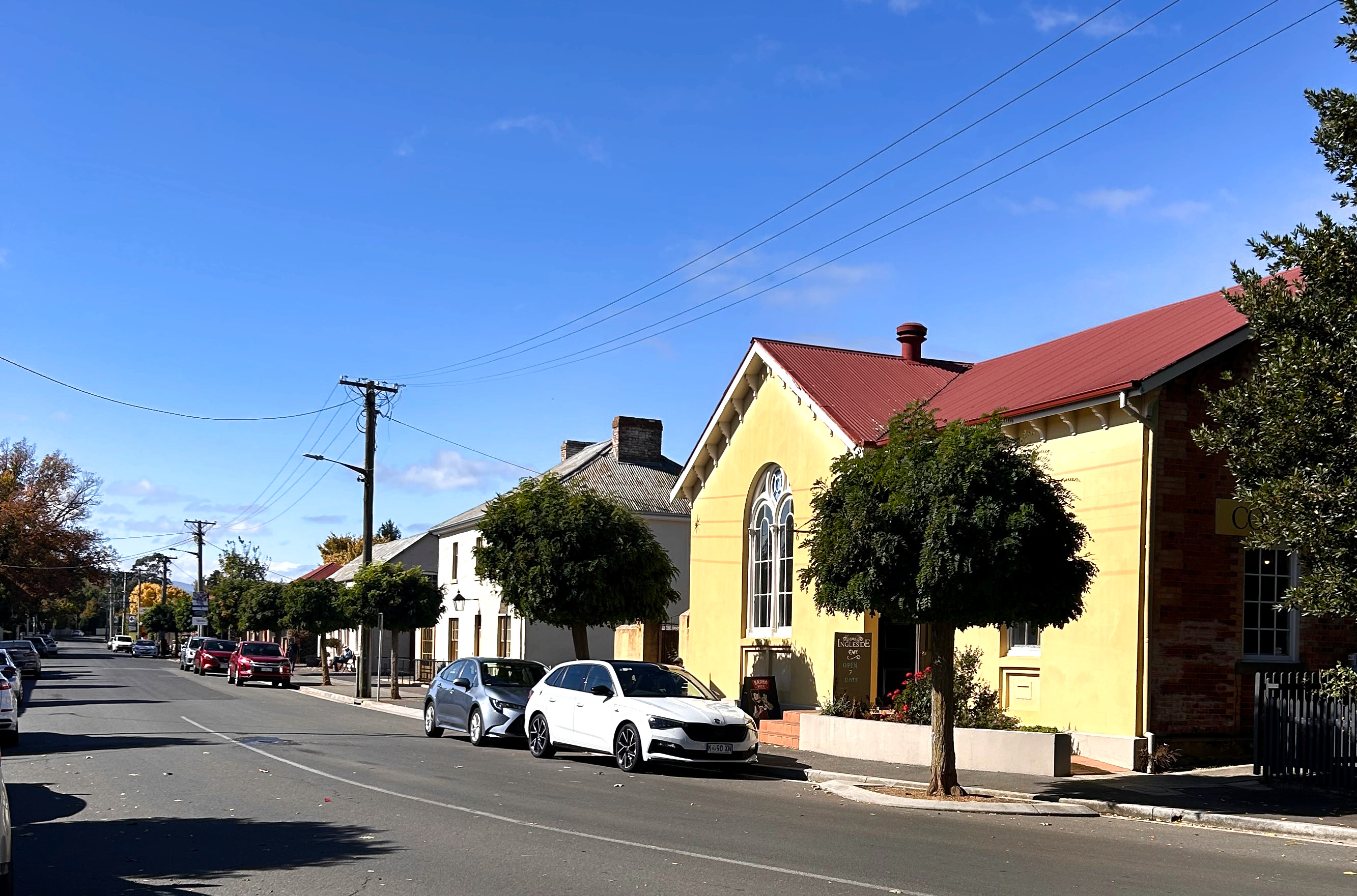
Afterwards, we returned to Evandale to photograph buildings surrounding the central shopping district. The Penny Farthing National Championships are held every February in Evandale, attracting riders from near and far to compete.


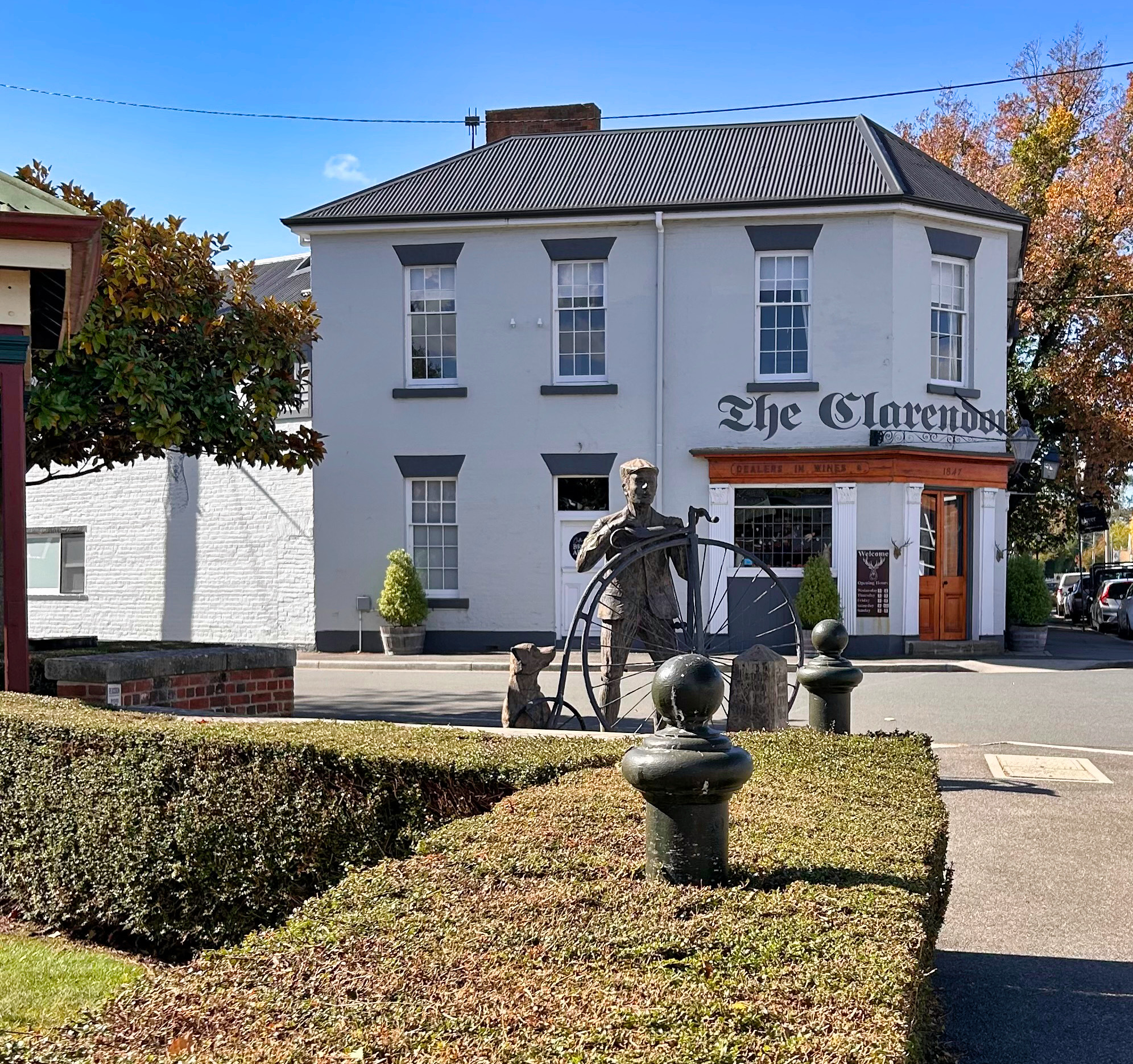
Today, Thursday, April 17, we headed south again to see Clarendon Estate, another National Trust Historical Mansion. It wasn't open yesterday when we visited Evandale. Clarendon was built 1838 by James Cox, a wool grower and merchant whose father, William Cox, built the road over the Blue Mountains in 1815.
We expected to do a self-guided tour, but after paying, we joined two other people for a guided tour of the mansion's interior.


 |


 |
After our tour we returned to Evandale for lunch and on the way walked through the cemetery where we came across James Cox's grave.


