Tuesday, December 22, 2020

Camps Australia Wide Version 11

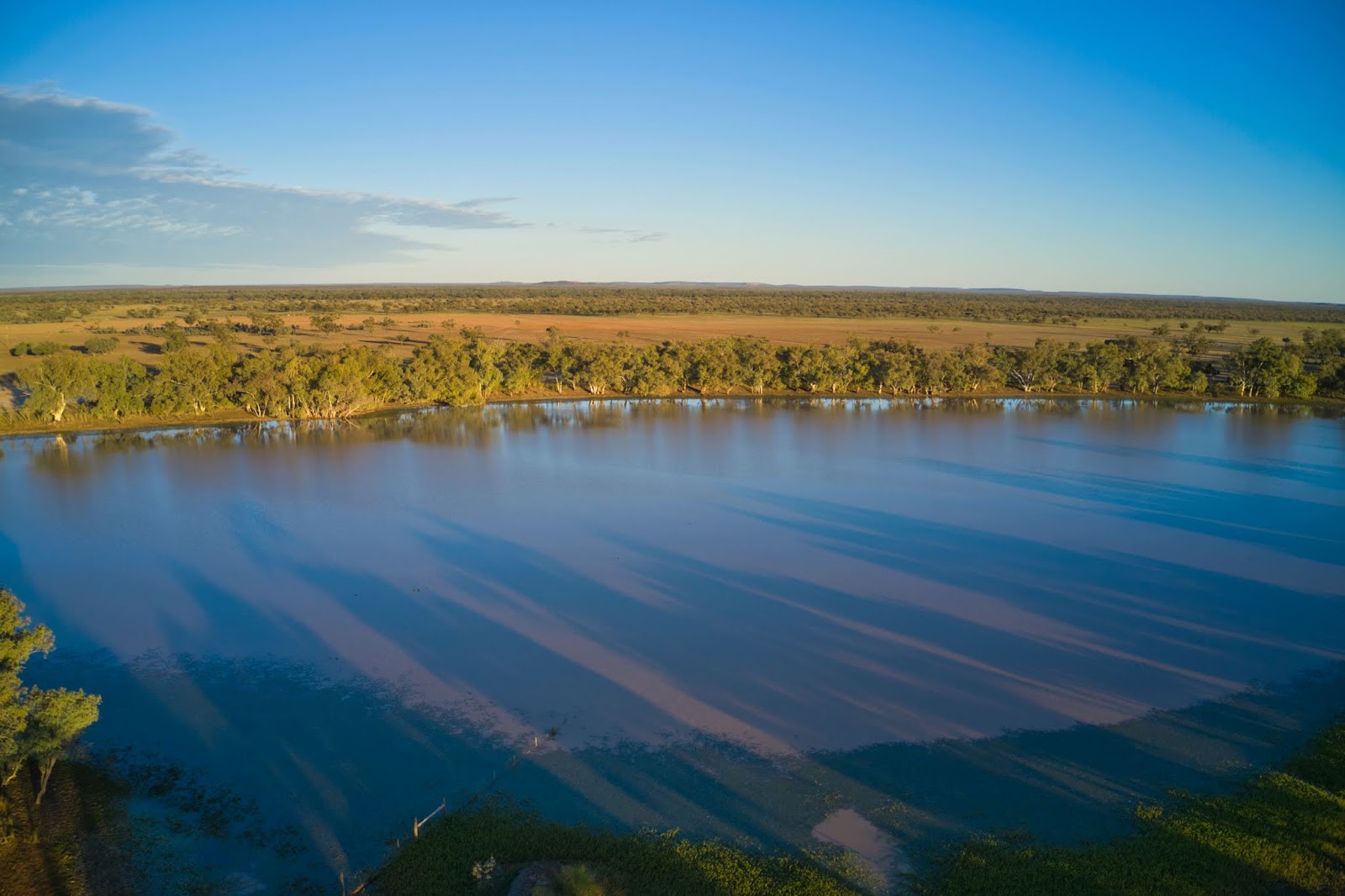
 I was delighted to discover that one of my drone photos, showing our Bushtracker camping for the night, will be featured on the cover of the new edition of the Camps Australia Wide book.


It's also the header image on our Blog page and was taken last year during our trip to the Big Red Bash. The photo was captured at sunset on Edeowie Station with the Heysen Range in the background, which is next to the Flinders Ranges. 

Saturday, October 10, 2020

A Very Very Short Breakaway

 Just one week before leaving, our 2015 VX 200 series Landcruiser decided it wouldn't cooperate. Firstly, the water pump was leaking, and more importantly, three warning lights appeared on the dash. The 4WD low light was flashing constantly, while the engine warning and slip indicator lights stayed illuminated. A call to Toyota, located just over 10 km away, suggested I could drive it there, but there's a risk the engine could enter limp mode. So, our roadside assistance through Ken Tame arranged for a flatbed truck.


To summarise, there's an issue with the EGR valves, and they require replacement. Parts alone cost over $ 2,000, with an additional $500 for labour. 
I couldn't believe our luck when Toyota said they would cover the parts. Our warranty had expired two and a half years ago, during which we'd travelled  87,600 kilometres. We collected the Landcruiser just a day before departure, and Toyota assured us the problem was now fixed.
 
With COVID-19 still causing problems across the country and many states imposing restrictions, our trip will be limited to New South Wales only. Our fully self-contained van relies solely on the amount of water we can carry, making this holiday similar to previous ones, with a stay of up to three nights in caravan parks. Hopefully, this also minimises the chance of coming into contact with anyone who may have the virus.
 
Our trip coincides with NSW school holidays, but by leaving the coast and heading into parts of Outback NSW, we hope the crowds will be fewer than if we stayed along the coastline. Regular readers of our blog know that on our first day's drive from home, we prefer a short journey just to get back into the rhythm. This holiday will be no different; our first night's stop will be at one of our favourite spots, just 152 km from home. Cangai is just over 60 km west of Grafton and east of the Gwydir Highway. The site is located in a valley beside the Mann River. The following photo was taken last year. 


Understandably, it's the beginning of the school holidays, but we couldn't believe how many groups of campers were already set up. Anyway, we were only there for the evening and planned to leave in the morning.

An early departure the following morning, just after 7:30 am, saw us heading further west before ascending the Gibraltar Range towards Glen Innes. We cruised up the range with our auto transmission temperature never exceeding seventy degrees, until just three-quarters of the way to the top, when the same three lights that were supposedly fixed by Coffs Toyota reappeared on the dash. To make matters worse, the engine went into limp mode.

The hazard lights came on as we inched forward at just a few kilometres an hour until we found a spot where only half the van remained over our lane, then I turned off the ignition. I cleared a P1251 and C1201 code using our Scangauge before restarting the engine. During this time, many caravans and cars overtook us, and although the warning lights stayed on, we were thankfully no longer in limp mode.

A decision was made to proceed to Inverell and visit the Toyota dealership on Monday morning. The engine entered limp mode two more times before reaching Inverell, but fortunately, both times we were on overtaking lanes. We checked into the Inverell Caravan Park, as it was the closest to the town centre.


Regrettably, my confidence was not boosted after speaking with the staff at the Toyota dealership, so I arranged for the cruiser to be dropped off at Grafton Toyota and the van to be towed home. Ros and I travelled home in the truck.


Of course, nothing is ever simple, and we had to remove the Hitch-Ezy from the van and replace it with a ball mount so the van could connect to the truck's tilt tray.


The Landcruiser remained at Grafton Toyota for two and a half days, but they couldn't identify any issues or codes, despite driving the vehicle multiple times and recording data each time. All their data shows that the car is functioning normally. The 97 km return trip was smooth, with the Landcruiser performing as it always has in the past.

Monday, August 10, 2020

New Drone Controller

I've finally taken the plunge and upgraded the standard controller that came with my DJI Mavic 2 Pro drone to DJI's Smart Controller, which was first released in 2019.


It's certainly a game-changer for me, allowing me to fly my drone without relying on my smartphone, as shown in the picture below.


The advantages absolutely outweigh the disadvantages of this new controller. 

The smart controller's ultra-bright 1080p screen is twice as bright as standard smartphones, and now there is no need for a hood to protect the screen from the sun's rays. 


Flying the drone with this new controller is much more pleasant due to its more ergonomic design compared to the original. I no longer need to fumble when removing the protective case from my iPhone before attaching it to the cable and control arms of the original controller. There was also the risk of dropping the phone while attaching it, which has happened more than once.


With just two buttons to press, you're ready to take off, making the process much quicker than with the original controller.


Another benefit is not needing to put your phone into aeroplane mode before flying. Receiving calls and messages during a flight can be distracting and potentially disastrous.


A further key feature is the 2.5 hours of battery life with this controller, allowing for four to five flights before needing a recharge. The short battery life of the original controller was a significant issue, as was the drain on the smartphone's battery.


Additionally, this controller can be used in temperatures ranging from -20 to +40 degrees Celsius, which is another advantage.


The MicroSD card slot on top of the controller allows you to expand its storage capacity, and I have inserted a 128 GB card to assist with backups and transferring videos and photos.


Two other notable features include Go Share, which allows you to easily share your photos and videos to your mobile device, and SkyTalk, which enables live streaming of your drone's camera view directly to Facebook and Instagram. However, at this stage, I am not sure I will ever use SkyTalk.
 
For me, the main disadvantage is the price. It costs $1,099, but in my case, it is money well spent.

Thursday, October 10, 2019

ABCO Caravan Services Coffs Harbour

After our recent trip away, our Bushtracker was booked into ABCO here in Coffs Harbour for some much-needed TLC. They are the only approved agent in the country for Bushtracker vans. They always have at least one new Bushtracker on their premises, along with several second-hand vans available for purchase at any given time.


We are planning a week away in early October, so there was no urgent need to return the van, and we left it with Darren and Kathleen for several weeks. During this time, they will perform a service, along with a few additional features. The service includes replacing the wheel bearings, aligning and balancing the wheels, and rotating the tyres.
 
We check our bearings every 10,000 km without fail.  We have been doing this for many years, even when towing camper trailers, and touch wood, we have never encountered any problems. 
Following a trip earlier this year and our recent journey, which covered 5,500 km, including 1,400 km over rough, corrugated dirt roads, it was definitely time for this service.
 
I usually replace the sacrificial anode in our Suburban hot water system, but recently we have experienced lighting issues. The team at ABCO will replace it while they service the system. 
 
Our current wind-up Cruisemaster VC stand is being replaced with a new 12-volt jack.


The Bulldog-powered jack, rated at 3500 lbs, is now standard equipment on all Bushtrackers and has been found to be very reliable. The jack comes with a handle that can be used in case of power failure. Hopefully, we will never need to use it, especially with our current 300Ah lithium batteries and 600 amp hours of solar panels on our roof. 


Our local canvas shop has created a transparent cover that can be used without removal, and Ros has designed a canvas waterproof jacket that fits over it to further protect it from moisture and UV rays.


Another addition was the installation of tyre carriers that incorporate a fold-down ramp for easier removal and replacement of tyres. So, thankfully, in the event of a tyre blowout or puncture, there will be no more lifting heavy tyres weighing over 35 kg.


Having read recent threads on other sites regarding gas leak issues, we have installed a 12-volt gas leak detector. This device will ensure that the alarm sounds if there is a possible gas line fracture or leak. It’s all about peace of mind, making sure there will be no damage to our van or, more importantly, ourselves.

Friday, August 9, 2019

Heading for home

After two relaxing days camped on the banks of Lake Houdraman just outside Quilpie, we continued east along the Diamantina Development Road. It is deeply concerning to witness the devastation caused by this prolonged drought.
 
Unfortunately, everywhere we have travelled on this holiday, the conditions have remained the same: dry and dusty paddocks, trees dying, and sheep and cattle either being hand-fed or trying to rely on the small amount of feed available on the ground.
A brief stop just over 200 km later in Charleville was followed by a further 100 km to spend the evening camping in the small town of Morven.
 
The recreation ground here offers camping facilities with toilets, showers, and some powered sites. We have camped here many times, either on our way to or from Outback Queensland.
Fees are $10 for powered sites and $5 for non-powered sites. Threads on Wikicamps mention that some people are stopping without paying, and even stealing toilet paper. Sadly, we hear stories like this regularly. It could be due to the large number of travellers who believe that the world owes them everything.
We decided to leave a $10 donation to help maintain this excellent facility, even though we didn't use any of the amenities.
 
Today's 93 km drive is precisely the kind of day we genuinely look forward to. We are just outside the small town of Mitchell and camped beside the weir. This spot has become one of our favourites since our first visit in 2009.
However, we have never seen the area so busy, with over fifty vans parked each evening. Thankfully, the large camping area means you don't feel cramped, unlike in a caravan park.
 
Although it’s a small town, it boasts some excellent facilities: natural hot springs to soak away those tired muscles, an excellent bakery, a superb butcher, and a clothing shop where Ros always spends money during our visits.
Our two days here injected just over $600 into the local economy through fuel, meat, groceries, bakery visits, and of course, the lovely clothes Ros can buy that she cannot find at home.
 
On our first evening, the heavens opened, and we also experienced pea-sized hail. Once the hail started, we both had a sense of déjà vu, recalling the large hail in 2013 that caused our first Bushtracker to undergo a full re-skin.


The road connecting Mitchell with St. George is a minor route, but it is, of course, the most direct one. It's narrow in some parts but fully paved, covering a distance of 208 km. We didn't stop in St George but continued another 44 km south to camp overnight near the Nindigully Pub. We arrived just around lunchtime, so we decided to have our main meal at the pub along with a few refreshing ales. Ros chose an open grilled sandwich, and I enjoyed my chicken vegetable wrap.
 
Once again, we’d never seen so many vans parked for the night. There was a band playing as we ate our lunch, and they performed again in the evening. It looked like the pub was bustling.
Our dinner that night was a selection of fine cheeses, salami, and crackers.
Today’s drive was just over 200 km. We continued along the Carnarvon Highway towards Moree. I must say, the government isn't using any fuel tax revenue for local roads here. The road was relatively poor, with signs warning us about its rough condition, which was accurate.
 
We passed through Moree and joined the Gwydir Highway for 23 km before turning onto Gum Flat Road, which runs for 3 km to Gum Flat Reserve beside the Gwydir River.
We camped here last year on our way to the Big Red Bash. Back then, the area was experiencing a drought, but the conditions are now much worse. The river levels are significantly lower, and the surface is mainly covered in algae. The little green grass that was there is now all dead and dusty.
 
When we arrived, there was no one else around, but a second couple arrived on our second day, camping several hundred metres away. We cooked over the fire both evenings and stayed outside until the fire died down, then retreated inside to escape the cold.


A longer drive today took us through Warialda, Inverell, and Glen Innes. From there, we descended through Gibraltar Range National Park to spend our last evening away at Cangai beside the Mann River. It's another favourite of ours, and when we arrived, we were surprised to find only three other groups here.


Some statistics from our six-week trip included covering 6,009 kilometres at an average of 21.25 L per 100 km. The fuel cost was $1,738.83, and our accommodation expenses for this period amounted to $147.00. 

Wednesday, July 31, 2019

Quilpie via Adavale

After a brief stop at Blackall, we headed towards Quilpie. This road goes through Adavale, 220 km south of Blackall.

It's one of those roads I've always wanted to take and planned to do so last year, but for reasons beyond our control, we couldn't go.

The Adavale road conditions, posted at Blackall for 'caution', made us wonder if there might have been damage from the recent rains, so we were unsure of what we might encounter.


The first 15 km are paved with bitumen, while the rest of the road is dirt. Our progress was halted about 5 km outside Blackall, where cattle were being fed while walking along the sides of the road.


We were accompanied by Glenda and Steve in their Bushtracker. Once we reached the dirt, we could see that the graders had been working on the road, and we did, in fact, come across the grader a further 20 km down the road.
 
The road conditions continued to be better than we had expected, and we maintained a comfortable speed of 70 km/h for the first 120 km.  


One or two of the creeks we passed by still held water from the recent rains, and this spot would have made a lovely campsite.


The road conditions changed just over 100 km north of Adavale and started to turn stony as we passed through a series of hills.


The rest of the journey into Adavale involved a rough, baked clay-like surface that was quite uneven in spots. It was also a relief to see wildflowers growing beside the road after recent rains.


Our plan was to spend the evening camped in Adavale after lunch at the pub, which consisted of a cold beer and a steak sandwich. 


The publican suggested we camp along Blackwater Creek, but neither of the areas we checked out was very appealing, so we carried on for another 100 km to camp just outside Quilpie.
 
We have camped at Lake Houdraman before, but back then, camping was free, and there were no facilities. Now it's known as 'The Lake,' and it costs $15 per night, regardless of whether you use your own facilities or theirs. There are also six powered sites near the office.
 
We decided to camp right on the lake’s edge and just use our own facilities, as we always do.

Saturday, July 27, 2019

Heading east towards Yaraka

Just like in the past, we again took Hammond Downs Road, 25 km south of Windorah. It saves a considerable distance compared to taking the Jundah to Quilpie Road. This road runs approximately parallel to Cooper Creek and its many channels, and can only be driven when there has been no rain. It offers a lovely drive through station properties and culminates at the property known as Retreat. 

The road north of this station also provides access to Welford National Park, where we have previously stayed. From here to Yaraka, the route is a mix of bitumen and dirt sections. We continued along Yaraka Road to spend the next two evenings camping behind the Yaraka Pub. This is our fourth visit here, and we have timed our trip to coincide with pizza night, held every Friday evening.


Camping fees are $3 per night, which includes all amenities. However, we have our own facilities, so we park away from those who require power and water.

Sunrises here are always very special, and this morning did not disappoint.


Mount Slowcombe rises 350 metres above the surrounding plains, situated near Yaraka. It provides panoramic views of the Yangyang Ranges and the small settlement of Yaraka far below.